
Rosland Capital on Gold and Other Precious Metals
May 2025 News Digest
May 27, 2025
- Hikers in a Czech forest discovered 598 gold coins hidden in an aluminum can and a box of gold jewelry and cigarette cases. This 15-pound, $330,000+ treasure likely dates to wartime, offering a glimpse into history.
- On May 14, Global Coin began offering the 2025 1 oz Silver Williamson Brooch coin for $129 (originally $264). This PR70-graded, Steven Rosati-signed coin is a royal tribute, available while limited supplies last.
- Greece will issue a 2025 silver proof coin featuring the astrolabe, an astronomical instrument designed by Ptolemy. This coin, part of the “Ancient Greek Technology” series, showcases a design based on astrolabe models from the Kotsanas Museum.
- A rare 2021 Australian $1 coin with the Mob of Roos design can sell for up to $25 due to its low mintage of just 106,000, making it the rarest circulating $1 coin in Australia.
- Eleven U.S. states, including Utah, Texas, and Wyoming, legally classify gold and silver coins as money. Louisiana, which previously acknowledged precious metals as currency in 2013, may soon formally recognize these coins as legal tender.
- The Shenzhen Guobao Mint’s new 10 Yuan Dragon silver bullion coin features a Tang Dynasty-style dragon and Great Wall vista. Crafted from 31.1g of .999 fine silver, with a limited mintage of 2 million, it is designed for collectors and investors.
September 2022 News Digest
September 1, 2022
- To commemorate the 75th anniversary of the last Walking Liberty half dollar, the British Virgin Islands government is releasing a new $1 silver bullion coin.
- The Reserve Bank of Zimbabwe has approved a November release date for small units of new smaller units of gold coins in such denominations as a tenth ounce, quarter ounce, and half ounce.
- The Royal Canadian Mint honors Oscar Peterson, Canada’s legendary jazz pianist, with a new $1 circulation coin.
- Silver in various forms can be used to potentially help in safeguarding your assets, but in order to help protect its value it’s important to store your silver correctly.
- An upcoming auction includes a collection of rare error coins, with unusual die varieties that sometimes happen in coinmaking.
- A 1,850-year-old Roman coin was discovered off Israel’s coast.
- The Austrian Gold Philharmonic coin led worldwide gold sales in the 1990s. This beautiful gold coin features Vienna’s concert hall’s famous organ, along with detailed illustrations of other orchestral instruments.
- The American Numismatic Society displayed $100 million of rare coins and sunken treasure at the Chicago World’s Fair of Money.
- Counterfeit coins have been around since the first coinage in 650 BCE. Learn about how these ancient coins were made.
- As cryptocurrency’s popularity is on the rise, many have been comparing gold and Bitcoin. Rosland CEO Marin Aleksov covers the potential benefits of each.
- People have been collecting coins since the Renaissance. Many collectors accumulate coins to help preserve history.
July 2022 News Digest
July 21, 2022
- American Eagle gold coins are some of the most popular coins amongst people looking to purchase gold.
- There are several causes of inflation, which may diminish your purchasing power.
- Gold has historically served as currency and as a potential means to help in protecting one’s assets – but its price is subject to fluctuation. Rosland Capital breaks down some of the factors that contribute to changes in gold’s value.
- Ancient gold coins thought to be linked to the Roman Empire were discovered by detectorists in a newly plowed field in the UK.
- A Norwegian jewelry collector was surprised to find a gold ring dating back to the Viking Age in a pile of costume jewelry purchased at auction.
- These 19th century coins are a relic from the Australian gold rush, when population booms in Victoria required local merchants to mint their own coins to keep up with demand.
- The first national coinage of Scotland came as King David I captured an English town with a silver mine and mint. Subsequent medieval Scottish kings also had coins minted with their own seal and likeness.
- One of the smallest coins ever made in Britain, a “sceat”, was recently discovered by a local detectorist and has been acquired by the Leeds City Museum.
- The rare and valuable Double Rose Noble of Kampden gold coin is often considered the largest and most beautiful Dutch medieval hammered gold coin – and it was just acquired by an American coin collection via auction.
- The wreck of the San Jose is one of three newly discovered shipwrecks off the coast of Colombia, and it contains a trove of Spanish colonial gold coins and treasure.
- The Yale University Art Gallery recently opened the Bela Lyon Pratt Gallery of Numismatics, which showcases more than 120,000 historical coins, medals, and paper money.
Rosland Capital presents the latest addition to the Formula 1® Coin Collection
July 18, 2022
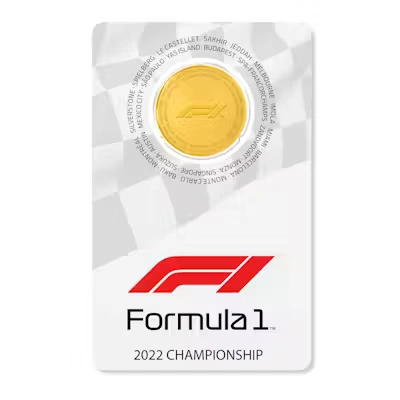
Rosland Capital is now offering these new Formula 1 limited edition gold coins, celebrating the most prestigious championship in motor racing.
The beautifully-crafted commemorative 1/4 oz gold coin lists all the race locations in the 2022 season, including Miami and Austin, in calendar order around the official F1 logo, shown in the center of the coin. On the obverse side of the coin is Ian Rank-Broadley’s portrait of Queen Elizabeth II. The packaging includes a Certificate Number, statement of metal fineness, weight, proof quality statement, and the signature of the accredited Swiss assayer at PAMP.
June 2022 News Digest
June 24, 2022
-
Rosland has a large and growing collection of exclusive “limited edition” coins. Marin Aleksov explains more about what being limited edition means for coin collectors and gold enthusiasts.
-
Platinum is used in everything from jewelry to dental work to cancer treatments. Rosland CEO Marin Aleksov explains more.
-
Many 2022 American Eagle silver coins contain an error! These coins feature a shiny incuse ring near the ring of the coin, which ICG graders say they’ve never seen before on these coins.
-
The Gold Canadian Maple Leaf coin displays Canada’s iconic Maple Leaf symbol on one side and the Queen on the other.
-
A one-kilo platinum coin, named the “Ultimate” set a new record for a coin offered at auction in Canada, selling for over $1.2 million CAD.
-
Rosland Capital presents the latest from their British Museum collection: The Knight, celebrating the 67 Lewis Chesspieces.
-
If you’re just starting out in precious metals, you’re probably getting used to a new vocabulary. One of the most important, “spot price”, is especially confusing. Rosland Capital has a guide to calculating and understanding this important metric.
-
In the Middle Ages, there was a period of decline in “real value” of European coinage resulting in large transactions requiring massive amounts of coins. Learn how many kingdoms and states began minting larger value “gross” coins.
-
A prominent collector of Mexican coinage discovered a super rare 1947 silver 50 centavos coin.
-
Before Congress established the US Mint, some individuals began minting their own gold coins. One such individual was a watchmaker and goldsmith named Christian Bechtler.
-
Have you heard of precious metals IRAs? These are specially designed self-directed individual retirement accounts.
-
The US Mint launched the American Platinum Eagle in 1997 and since then has only minted them intermittently. In addition to the metal content, these coins are especially notable for the unique designs of proof coins that are different than the bullion issues.
Causes of Inflation: What Is Inflation and Why Does it Occur?
June 22, 2022
Inflation is all over the news, but what are some root causes? There are multiple types of inflation, each brought on by different economic shifts. In this article, we’ll break down the types of inflation and their common causes.
Understanding Inflation
Inflation is the rise in the prices of products, goods, and services over a period of time. On a short-term scale, inflation may feel insignificant. However, over time, it can significantly diminish the purchasing power of your money, savings, and investments.
Types of Inflation
- Demand-pull inflation: This type of inflation occurs when demand is too high for supply. Prices are increased to maintain the sales equilibrium and supply chain, and to ensure companies can continue stocking goods.
- Cost-push inflation: This type of inflation occurs when prices increase to meet input costs. If businesses are paying more for goods and services, rates rise for buyers.
- Built-in inflation: This type of inflation is usually a result of either or both types of inflation: demand-pull and cost-push. Over a period of time, the cost of living rises, and these changes become a ‘normal’ economical state.
Common Causes of Inflation
- Growing Economy: A growing economy that surpasses the ‘long-run trend rate’ is likely to lead to inflation. When demand increases faster than supply, there isn’t a sustainable rate of growth. In other words, if a growing economy induces the circulation of more buyer money, rates may eventually rise.
- Expansion of the Money Supply: The federal government or central banks can add fiat currency to the economy. When this occurs, the money supply is altered which may lead to inflation. If the money supply is higher than what the economy is yielding, inflation occurs as an attempt to restore balance.
- Government Regulation: The government monitors economic conditions and will create fiscal and monetary policies accordingly. Sometimes these expansionary policies can backfire, causing more issues for consumers and businesses alike.
- Managing the National Debt: If the government has a high debt-to-gross domestic product (GDP) they aren’t able to pay off debt without gaining more debt. If the national debt is on the rise and output is lowering, inflation can occur as an attempt to pay off this debt with devalued money.
- Exchange Rate Changes: A large portion of the economy is built on imports and exports. If the value of the dollar goes down in comparison to foreign currency, it can inflate the price of imported goods for all US consumers.
Adjusting to Inflation
Inflation can devalue your hard-earned savings, retirement allocations, and other assets. For years, gold and silver have been used as a potential hedge against inflation. When inflation is high, it can be important to consider diversifying your assets. This may be helpful in potentially safeguarding your retirement savings and hedging against long-term inflation.
Here at Rosland Capital, we offer precious metals in physical form. Customers can opt for direct delivery or precious metal backed-IRAs.
Contact Rosland Capital today at 1-844-552-0268 to connect with our knowledgeable team of specialists, who can help you make better informed decisions about purchasing precious metals.
Rosland Issues Exclusive Coins for the F1® Miami Grand Prix
May 25, 2022

May 2022 News Digest
May 23, 2022
-
A recent coin auction generated record-breaking prices for ancient coins. The auctioned coins were part of four collections: MONEY OF THE CELTS – The Flesche Collection, Greek Coinage, Coins of the Roman Republic, and Coins of the Imperial Period.
-
In celebration of the PGA TOUR, Rosland Capital highlights its exclusive licensed coin featuring American golf icon Arnold Palmer.
-
An amateur archaeologist and detectorist recently discovered a clay pot with over 1200 coins from the Roman Empire in a Swiss forest. This discovery is notable because it will help archaeologists better understand how money was used and circulated during the reign of Constantine the Great.
-
Ancient Greek coins often have representations of the gods of mythology. Many Greek cities minted coins featuring more obscure divinities that were associated with the specific city’s history, mythology, or geography.
-
Gold and silver bullion coins have increased in popularity over the last 30 years. More recently, the bullion coin market has also seen expansion in demand for platinum and palladium bullion coins.
-
Formula 1 hosted its first Miami Grand Prix on Sunday May 8, 2022. Rosland Capital expanded its exclusive, licensed F1 collection to include a ¼ oz gold coin commemorating this historic event.
-
As inflation continues to increase and Americans wrestle with economic volatility, many are turning to gold as a way to potentially help protect their assets.
-
The Republic of Ghana has released another silver bullion coin as part of its “Giants of the Ice Age” series, this one featuring a Holarctic deer.
-
Although economists have long seen correlations between gold prices and interest rates, the price of gold may actually be influenced by several factors. Rosland CEO Marin Aleksov discusses the relationship between interest rate fluctuations and gold in his latest blog.
-
Did you know that the first circulating gold coins were made from electrum, a naturally occurring alloy of gold and silver? The coins are from the ancient region of Ionia and the meaning of their unique design is still a mystery to historians.
-
The United States Mint recently celebrated its 230th anniversary after its creation with the Coinage Act of 1792.
April 2022 News Digest
April 21, 2022
-
A rare Queen Elizabeth I coin was recently sold at an auction in Germany for the highest price ever in the country.
-
Rosland CEO Marin Aleksov discusses more of the most valuable gold and silver coins sold at auction.
-
Did you know that Rosland has an exclusive specialty collection of Formula 1® coins?
-
If you’re exploring the world of coins, it’s important to understand the difference between bullion and numismatic coins. Marin Aleksov breaks it down.
-
Officials recovered thousands of cultural goods in a global crackdown, including Roman Coins.
-
Gold prices can be a little complicated. Learn how to research gold spot prices.
-
A rare Irish penny from 1927 recently appeared in a London Auction.
-
Ancient Greek kingdom Paeonia was known for being rich in resources, including gold and silver which were minted into beautiful coins traded throughout the region. The Athenian owl featured on these ancient Greek coins is one of the most famous coins from antiquity.
-
A 2,000-year old gold coin celebrating the death of Julius Caesar is expected to sell at auction for $2 million.
-
Coins hold value beyond the value of the metal with which they’re minted. Historians and archeologists routinely lean on ancient coins to understand ancient cultures, trade routes, and politics.
-
With bitcoin and cryptocurrencies growing in popularity, the gold vs. bitcoin debate rages on. Marin Aleksov covers the key differences between these unique assets.
-
Gold ingots that were recovered from an 18th-century shipwreck were recently returned to France.
-
Rosland Capital continues to expand their exclusive British Museum collection with the introduction of a new 1.5 oz Lewis Chess piece.
-
The half-cent is the smallest denomination ever produced by the U.S. Mint. Meet the Braided Hair half cent from 1957.
-
Ever wonder how gold is mined? Marin Aleksov covers the three main ways we get gold.
-
The Ancient Lydians of Egypt were the first to create coins as an exchange of payment. Learn about these beautiful and unique gold coins.
Powell No Volcker—Inflation Set to Continue Upwards
March 22, 2022
A note from history. Back in 1980 with US inflation heading into double digit territory, the then Fed chairman, Paul Volcker, effectively raised the Federal Funds rate to an unprecedented 20% to bring it under control. Volcker was a veritable giant of his time, both intellectually and physically (he was 6ft 7in in height) and no doubt his physical presence was an asset he utilized to his full advantage in persuading other Fed board members to follow his lead.
Although this move led to the deepest recession since the 1930s, Volcker is, in hindsight, also credited with rescuing the US economy, leading to a couple of decades of low inflation and strong economic growth.
US inflation again looks to be heading into double digits, so what does the Fed do this time around? It raises the Federal Funds rate by a modest 25 basis points, with the promise of more similarly sized rate rises to come this year and next.
True the current situation is rather different than in 1980 with the US now having to service an enormous debt build-up – arguably as a result of Fed policy over the past several years – and the Fed will no doubt claim that the inflation rate is not nearly as high as some put it.
(The US Federal Funds rate is described by Wikipedia.com as the interest rate at which depository institutions (banks and credit unions) lend reserve balances to other depository institutions overnight on an uncollateralized basis.) This effectively directly influences the interest rates applied by financial institutions when they lend money to outsiders.
The effective federal funds rate (EFFR) is calculated as the effective median interest rate of overnight federal funds transactions during the previous business day. It is published daily by the Federal Reserve Bank of New York.
The federal funds target rate is determined by meetings of the members of the Federal Open Market Committee (FOMC) with the most recent such meeting held on March 15th and 16th. (The committee may also hold additional meetings and implement target rate changes outside of its normal schedule.)
Nowadays the Fed uses the Personal Consumption Expenditure Index (the PCE) as its preferred inflation measure, but this tends to track lower than other inflation data which may give the Fed perhaps undue confidence that the inflation rate may be lower than that being experienced by the consumer at large.
For example, John Williams’ Shadowstats.com site, which calculates economic data in the way it used to be before the government, as governments tend to do, started to assess this kind of data in a more favorable light, puts current inflation at around 15% and probably rising.
This kind of inflation level would probably be recognized as a more accurate measure by the person in the street and compares with the official Consumer Price Index (CPI) figure of 7.9% and also rising. The other inflation data statistic – the Producer Price Index (PPI) which looks at output price rises from the manufacturing and fabrication sectors – is already at 10% and also rising.
What is even more worrying for the US consumer is that the inflationary effect of the new economic sanctions imposed on Russia, which could be substantial, given Russia is the largest producer and exporter of a number of metals, minerals and key foodstuff-related items, has probably not yet even come into the data calculations.
The Fed could be quite hamstrung today by the fear of imposing a sufficiently high Federal Funds rate to have any impact on the current inflation rises without driving the US economy into recession and stagflation.
This would also thereby reverse downtrending unemployment levels and lead to a sharp fall in GDP, complicated by the huge additional debt servicing costs due to higher interest payments. It is thus very much caught between a rock and a hard place largely of its own making.
As I said in the title of this article, Powell is no Volcker, prepared to take the kind of enormous interest rate rise to slay the inflation beast. But to be fair the position now is very different from that of 42 years ago which probably makes such an option impossible.
The enormous US debt level, mostly built up since the Great Financial crisis of 2007/2008, makes the cost of servicing this debt at higher interest rate levels virtually out of the question.
Powell suggests that inflation will start to come down anyway in the second half of the year, but the Fed’s track record on predicting inflation trends has been poor so far.
Rising inflation was deemed to be ‘transitory’ for many months before this term was dropped last November, and since then it has soared on almost any measure thereof.
And this was before any inflationary impact of the Russian invasion of Ukraine, and the imposition of a much more severe tranche of economic sanctions on Russia. This is adding an additional severe inflation impact into the equation.
The small Federal Funds rate increases imposed and promised look likely to be ineffectual in bringing inflation down, although may be small enough to avoid recession and an equities crash. However, they will probably do little to bring real interest rates out of distinctly negative territory, which should be positive for non interest-generating assets like gold.
The Fed is thus in a very difficult position to fix the current problem. It has to hope that external factors will start to reduce the inflationary trend, but this writer believes that this is unlikely and we will most probably see inflation move onwards and upwards for the foreseeable future
by Lawrence Williams

Lawrence (Lawrie) Williams is a highly regarded London-based writer and commentator on financial and political subjects, specializing in precious metals news and commentary. He graduated in mining engineering from The Royal School of Mines, a constituent college of Imperial College, London. He has contributed articles on precious metals to the Financial Times, Sharps Pixley, US Gold Bureau and Seeking Alpha among others.
The opinions expressed in this article are the author’s own, do not necessarily reflect the opinions or views of Rosland Capital LLC or its employees, and do not constitute financial or investment advice or recommendations from the author or Rosland Capital or its employees. The author is compensated by Rosland Capital for his articles.