
Rosland Capital on Gold and Other Precious Metals
March 2025 News Digest
March 21, 2025
- Switzerland marks 100 years of the 1925 100-franc Vreneli with a new gold coin designed by Chiara Principe. The coin features a modern Vreneli design, Swiss symbols, while still referencing elements from the original Vreneli coin.
- Despite the dominance of fiat currency, gold continues to serve as a financial safeguard. Countries like Ghana, Iran, and Zimbabwe use gold coins for savings and liquidity control, while Kazakhstan plans a digital gold reserve coin, reinforcing gold’s lasting economic importance.
- Ukraine’s National Bank introduced the Let’s Hold the Line! 5-hryvnia silver coin on February 25, 2025, to commemorate the third anniversary of the Russian invasion. The coin’s design symbolizes the unity of soldiers, the defense lines (which resemble a trident), and the support of civilians in the war effort.
- The Royal Canadian Mint has released a limited-edition Zodiac Signs silver coin, featuring a celestial sun-and-moon design. Crafted from pure silver, this cosmic collector’s piece has a limited mintage of 4,000 and is available online now.
- A hoard of Roman coins, spanning 200 years, from 57 B.C. to the reign of Marcus Aurelius, was discovered by metal detectorists in Norfolk, UK. The find suggests the stability of Roman currency over centuries.
Central Bank Gold Purchasing Impact on Demand
August 4, 2021
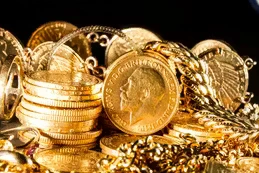
Some analysts see the Central Bank as one of the key factors in the gold supply/demand equation, specifically, the additions to, or subtractions from, the known national Central Bank gold holdings.
These volumes can make the difference between annual gold supply and demand being in surplus or deficit, and will thereby have a consequent impact on the gold price.
Since the end of 2008, Central Banks have been net buyers of gold, with volumes purchased ranging from a little over 650 tonnes (metric tons) in 2015 down to a little over 300 tonnes last year according to figures from the IMF, but some significant purchases already this year mean that the half-year figure for 2021 already appears to be in excess of last year’s total.
In addition to what appear to be regular central bank purchasers like India, Kazakhstan and Uzbekistan – all of which have added close to 20 tonnes each to their reserves so far this year – there have been significant additions to reserves reported by Hungary (63 tonnes in March) and Thailand (90 tonnes across April and May).
Additionally, Brazil has reportedly added 41 tonnes in the past month. Other countries – notably Poland and Ghana – have also intimated they are planning significant additions to reserves in the future, but at unspecified dates.
Poland did buy 100 tonnes of gold back in 2019 so it already has a track record of buying a substantial one-off volume of gold. It makes one wonder whether there are other central banks out there also considering some expansion of their own reserves as some distrust in the US dollar grows given the nation’s current huge indebtedness.
Japan also appears to have added almost 81 tonnes of gold to its official reserves earlier this year, but this is reported to have been an internal transfer between different accounts held by the Ministry of Finance, which adds a degree of distortion to this year’s official global figures.
This transfer between different internal accounts has been a mechanism utilized by China in the past to explain away large gold reserve increases within a single financial year in an attempt to explain figures which might otherwise distort an orderly gold market.
It should also be noted here, though, that China is considered to be far from transparent in disclosure of its real gold holdings – seen by many analysts to be far in excess of the 1,948 tonnes it reports to the IMF.
There is speculation that the Chinese military holds substantial amounts of gold in its own right, as do many of the state-owned banks which some reckon hold some or all of their gold on behalf of the government, and these amounts fall outside what China feels it needs to report to the IMF.
For a number of years Russia was the world’s largest known accumulator of gold for its Forex reserves – in part to reduce its reliance on US dollar-related securities in case America might effectively weaponize these in some kind of global trade war.
However Russia ceased adding to its gold reserves officially last year in April in favor of persuading its gold miners (it is the world’s second largest gold producer according to the latest figures from precious metals specialist consultancy Metals Focus ) to sell their product on the international market.
This policy was enacted to alleviate balance of payments shortfalls, caused by the huge drop in the price of oil and gas, which had been the nation’s primary export earners.
Recently oil and gas prices have recovered substantially, and some believe that the Russian Central Bank might return as a gold buyer. Interestingly it has recently changed the investment policy of its Sovereign Wealth Fund, which is controlled by the Central Bank, to enable the Fund to buy gold which it was prohibited from doing beforehand.
There have been a number of countries which have made some significant changes to their official gold reserves since Central Banks became net buyers. The table below shows the cumulative totals for all those countries which have made significant changes (of more than 10 tonnes plus or minus cumulatively) in their reported reserves since 2010:
Table: Countries which have reported significant changes to gold reserves since 2010 (tonnes)
|
Country |
Totals |
|
|
Bangladesh |
+10.5 |
|
|
Belarus |
+26.9 |
|
|
Bolivia |
+14.2 |
|
|
Brazil |
+45.7 |
|
|
Cambodia |
+38.0 |
|
|
Euro Area |
-29.4 |
|
|
Germany |
-47.7 |
|
|
Hungary |
+91.4 |
|
|
India |
+138.5 |
|
|
Iraq |
+90.6 |
|
|
Japan** |
+80.8 |
|
|
Jordan |
+30.8 |
|
|
Kazakhstan |
+335.3 |
|
|
Korea (South) |
+90.0 |
|
|
Kyrgyzstan |
+13.5 |
|
|
Libya |
-27.2 |
|
|
China, P.R.: Mainland |
+894.2 |
|
|
Mexico |
+111.3 |
|
|
Poland |
+127.6 |
|
|
Qatar |
+44.3 |
|
|
Russian Federation |
+1,643.3 |
|
|
Serbia |
+23.0 |
|
|
Sri Lanka |
-14.4 |
|
|
State Oil Fund Azerbaijan |
+101.8 |
|
|
Thailand |
+160.2 |
|
|
Turkey (Commercial Banks)* |
+606.1 |
|
|
Turkey (Central Bank)* |
+298.9 |
|
|
United Arab Emirates |
+55.4 |
|
|
Uzbekistan |
+182.6 |
|
|
Venezuela |
-199.6 |
|
|
*Turkey classifies gold held by its commercial banks as a part of its gold reserve structure. ** Japan reported an 81 tonne increase in its gold reserves in March 2021, the culmination of an off-market transaction between two different divisions within the Ministry of Finance. |
The net total of additions to Central Bank gold reserves since 2010 is just short of 5,000 tonnes, led by big inflows into the Russian and Chinese Central Banks. This may have had an important impact on gold supply/demand fundamentals since then, with an overall positive impact on the gold price.
Considering Central Bank additions to their gold reserves seem likely to at least continue for the foreseeable future, they will remain an important global demand component for the yellow metal. Likewise, it should also have a corresponding influence on gold pricing in the future.
As can be seen from the table, a considerable number of Central Banks or state entities (around 30) have been active in selling and purchasing gold for their reserves over the past 12 years.
Some countries, particularly from Europe, do not feature in the above table but had been substantial gold sellers prior to 2010 with sales made under the four Central Bank Gold Agreement (CBGA)s.
The last CBGA terminated in September 2019. To recap, the four CBGAs were five-year periods where European central banks agreed to put a cap on their gold sales, initially prompted by the then UK Chancellor (Finance Minister)’s controversial decision to sell around half the country’s gold reserves between 1999 and 2002 when the gold price was at its nadir.
This is still referred to by some as Brown’s Bottom, after UK Labour Government minister Gordon Brown (later to become Prime Minister) who reportedly made the decision, which many still see as a huge error of judgment given the course of gold prices since then.
It had initially been forecasted that the current year would see another low level of Central Bank gold purchases, in line with the 2020 figure of a little over 300 tonnes. But the recent big, and unexpected, gold purchases by the Central Banks noted above, have caused this to be revised substantially upwards.
Latest estimates put this year’s Central Bank gold purchases at upwards of 500 tonnes (a substantial amount given global new mined gold production is in the order of 3,500 tonnes and possibly shortly to be trending downwards) and thus a key component in any ongoing gold price analysis. This will remain as long as Central Banks continue to increase their gold reserves and currently some analysts see no sign that any cessation of this is likely to occur.
by Lawrence Williams

Lawrence (Lawrie) Williams is a highly regarded London-based writer and commentator on financial and political subjects, specializing in precious metals news and commentary. He graduated in mining engineering from The Royal School of Mines, a constituent college of Imperial College, London. He has contributed articles on precious metals to the Financial Times, Sharps Pixley, US Gold Bureau and Seeking Alpha among others.
The opinions expressed in this article are the author’s own, do not necessarily reflect the opinions or views of Rosland Capital LLC or its employees, and do not constitute financial or investment advice or recommendations from the author or Rosland Capital or its employees. The author is compensated by Rosland Capital for his articles.
August 2021 News Digest
August 4, 2021
-
How do precious metals prices perform during July and August? Do the summer months mean a Happy Holidays for Precious Metals?
-
This article analyzes the impact The Central Banks have on gold pricing and demand, as well as the breakdown of the gold reserve in each country.
-
Rosland Capital presents a new, limited edition 1/4 oz gold proof coin release celebrating the 2021 Formula 1 Championship.
-
At an auction hosted by Amber Lounge, Rosland Capital donated a 1-kilo gold proof coin featuring F1 racing legend Michael Schumacher, which raised over 100,000 euros to support disabled children and their families.
-
Rosland Capital CEO Marin Aleksov discusses bullion vs. numismatic coins, what makes each one valuable, and why it’s important to know the difference.
-
Contributor Lawrie Williams discusses inflation, interest rates, the Fed, psychological price levels, and algorithms, among the many factors at play in the volatile precious metals market.
-
This article explains the importance of understanding what spot prices are and provides helpful tips for purchasing gold and other precious metals.
-
What is Basel III, and how might it affect precious metals prices?
-
Marin Aleksov, CEO of Rosland Capital, explains the relationship between the national debt and gold prices.
Rosland Capital releases new Formula 1® Championship 1/4 oz gold coin
July 14, 2021

This new, limited edition proof gold coin release celebrates the 2021 Formula 1 Championship. The Grand Prix events in the 2021 schedule, as confirmed 1/1/2021, are listed around the face of the coin, with the dynamic F1 logo in the center.
On the obverse side of the coin is Ian Rank-Broadley’s portrait of Her Majesty Queen Elizabeth II and the year of minting – 2021.
These new coins are .9999 fine gold, 0.25 Troy oz., 2021-issue, legal tender proofs. All coins in the Formula 1 coin collection are minted by Swiss-based PAMP SA, one of the world’s finest producers of precious metal coins.
The packaging includes a Certificate Number, statement of metal fineness, weight, proof quality statement, and the signature of the accredited independent Swiss assayer at PAMP.
Happy Holidays for Precious Metals?
July 7, 2021
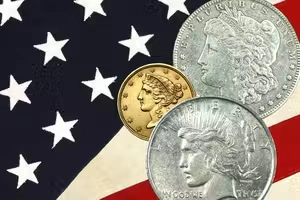
As the US started to wind down for the Independence Day holiday, precious metals perked up, although admittedly by pretty small amounts. Even so the moves could be significant given how frequently major U.S. holidays tend to precede changes in the directions of the precious metals markets.
Typically the July 4th holiday marks the start of the American summer holiday season and precedes a period of lighter trading statistics in the equities and commodities markets. Many traders and financiers take off to the Hamptons, or further afield, although the latter may be difficult this year due to travel restrictions in place to try and control the spread of the COVID-19 virus pandemic.
However the Hamptons and the eastern seaboard resorts will likely have a boom year this year due to international travel restrictions preventing most travel to Europe or beyond. The effect on precious metals prices may be hard to predict, but July and August have seen some of the highest gold and silver prices yet in recent years.
If the weather remains good in the beach resorts, which it usually is at this time of year, the feel-good factor comes into play and often prices have tended to advance accordingly.
But beware, this could all come crashing down at the end of August with those keen to see prices lower trying to read as much negative interpretation as possible into the discussions at the Big Fed Economic Symposium at Jackson Hole – which takes place this year from August 26-28.
This is followed almost immediately by the Labor Day holiday – on September 6th this year – which marks the end of the U.S. and Canadian holiday seasons, and the combination, and change of mood as fall and winter approach, can bring any positive price developments crashing down again.
I’m not saying that this will definitely happen, but the precious metals buyer should be aware of the potential ramifications of these dates and the seasonal influences that tend to move precious metals prices.
Any intimation at the Jackson Hole meeting that inflation may be rising out of control, as some fear, and that this could cause the Fed to start tapering (either by raising the Federal Funds interest rate, or cutting back on its current quantitative easing program), sooner than it has been indicating – the so-called ‘hawkish’ interpretation – could bring things crashing down.
It only requires a very short memory to recall the price aftermath of the June Federal Open Market Committee (FOMC) meeting which knocked a cool $100 and more off the gold price, although it has recovered some, but not all, of its lost ground since.
The big question is likely to be whether late August will give enough time for the markets to make the call on whether rising inflation is only likely to be ‘transitory’ as the Fed claims, or deep seated enough to cause problems down the line. If the latter interpretation prevails gold, silver and the pgms could be in for a torrid time price-wise.
There may be a crumb of comfort for the precious metals buyer, though, in the latest statistical chart on the gold price and the 10-year USA Treasury Inflation Protected Securities (TIPS) yield published by Murenbeeld & Co in Canada in the consultancy’s latest Gold Newsletter. Over the years the consultancy has demonstrated the extremely close relationship between movements in the gold price and the inverse of the 10-year TIPS yield.
For the past couple of weeks, coinciding with the latest perhaps engineered weakness in the gold price, these figures have widened significantly. This suggests either irrational gold price weakness, or an undue fall in the TIPS yield. We suggest the former is most likely and the gold price may catch up accordingly.Where gold goes the other precious metals, particularly silver, tend to follow.
The above could well account for the apparently stronger gold price ahead of the Independence Day holiday. It still has a bit of a ways to go before the apparent imbalance is restored so keep an eye on the figures. They could well suggest a gold undervaluation with yellow metal due for further price recovery.
by Lawrence Williams
Lawrence (Lawrie) Williams is a highly regarded London-based writer and commentator on financial and political subjects, specializing in precious metals news and commentary. He graduated in mining engineering from The Royal School of Mines, a constituent college of Imperial College, London. He has contributed articles on precious metals to the Financial Times, Sharps Pixley, US Gold Bureau and Seeking Alpha among others.
The opinions expressed in this article are the author’s own, do not necessarily reflect the opinions or views of Rosland Capital LLC or its employees, and do not constitute financial or investment advice or recommendations from the author or Rosland Capital or its employees. The author is compensated by Rosland Capital for his articles.
July 2021 News Digest
July 2, 2021
-
Scholarships are now available for the Coin University program in San Francisco.
-
A 1730 Mexico City-struck cob 8 reales Royal sold for $102,000.
-
Along with lithium, nickel and cobalt, platinum is specifically mentioned in the China State Council’s New Energy Vehicle Industrial Development Plan (2021-2035).
-
Krugerrand gold coins are among the rare coins valued at approximately $5,000 that Ronnie Baugh reported stolen in a dispute with the bank housing his trust fund.
-
A platinum mine in Siberia is set to receive $7.8 billion in financing from Russian banks.
-
Precious metals expert Lawrie Williams examines the pivotal factors that may weigh on gold’s market performance through the remainder of 2021.
-
Some US coin prices have soared due to recent changes in supply and demand.
-
In June, the only 1933 Saint-Gaudens $20 Gold Double Eagle that is legal to be owned by a private party was sold for $18.87 million.
-
Enduro Metals discovered palladium in a Burgundy 72-foot drill core.
-
Ancient coins discovered by a Florida State University team are now on display in an Italian exhibition.
-
Jeff Garrett of the Numismatic Guaranty Corporation makes the case for considering Saint-Gaudens Double Eagles as a prime-candidate starter coin.
-
In this blog article, Rosland Capital CEO Marin Aleksov looks at a few of the many uses of platinum.
-
Rosland Capital CEO Marin Aleksov discusses five of the most popular precious metal mints and brands to consider when you’re in the market for premium and bullion coins and bars.
Basel III – A Damp Squib for Gold So Far
June 30, 2021
Many gold buyers will have been waiting for the initiation of the latest phase of the Basel III banking accord to come into force for European banks, as it did on Monday June 28th. They will have had varying expectations of its likely effects on the global gold market and on precious metals prices in general.
Some analysts and commentators had been hugely bullish for gold and silver prices on the likely outcome once the strictures on the banks, and the possible impact on precious metals markets, had been fully implemented.
This writer had remained mostly neutral, assuming there would be little change in prices – a view that seems mostly to have been correct so far as European and US markets have been showing so far, but it is early days yet and any changes in precious metals price perception may take time to sink in and take effect.
So what is Basel III, and how might it affect precious metals prices? In short, the latest phase represents an imposition on the banking sector to implement asset policies designed to reduce the likelihood of the kind of banking meltdown which led to the 2008 financial crisis reoccurring. The whole package has been a long time in the making and not due for final full implementation until 2023, although its application to global bank liquidity structures is now mostly in place.
However, it should be noted that the important UK banks (probably the world’s second largest state-independent banking sector after the US), and some other global banking institutions, are not due to fully comply until January next year, if then.
As far as the banks are concerned, the Basel III accord comprises a suite of financial reforms aimed at strengthening regulation, supervision, and risk management within the sector, and by reducing counterparty risk. It is being introduced in an attempt to improve the banks’ abilities to handle systemic shocks from financial stress and to strengthen their transparency and disclosure.
It is part of a continuing process to enhance regulation in the global financial sector. The accord aims to prevent banks from hurting the global and domestic economies by taking on more risks than they can safely handle.
One aspect of the reforms as they directly impact gold is that banks are now allowed to classify allocated physical gold as a Tier 1 (the safest level) asset, but unallocated gold remains only a Tier 3 level asset (the riskiest asset level). (All gold holdings used to be classified in Tier 3.)
Some analysts believe that this re-classification will put additional demand into the market for physical gold and consequently drive prices higher – much higher in some views.
Much of the information set out above and below is covered in more detail on the CFI (Corporate Finance Institute) website – recommended reading on Basel III and its detailed implications and criticisms.
In effect, the Basel III accord raises the minimum capital requirements for banks from the 2% of the previous Basel II accord to 4.5% of common equity, as a percentage of the bank’s risk-weighted assets. There is also an additional 2.5% buffer capital requirement that brings the total minimum requirement to 7%.
To conform to this requirement, the US Federal Reserve fixed the leverage ratio at 5% for insured bank holding companies, and at 6% for Systematically Important Financial Institutions (SIFI).
Basel III has also introduced the usage of two liquidity ratios – the Liquidity Coverage Ratio (LCR) and the Net Stable Funding Ratio (NSFR). The LCR requires banks to hold sufficient highly liquid assets that can withstand a 30-day stressed funding scenario as specified by the supervisors.
On the other hand, the NSFR requires banks to maintain stable funding above the required amount of stable funding for a period of one year of extended stress. The NSFR was designed to address liquidity mismatches and started becoming operational in 2018.
The requirement that banks maintain a minimum capital amount of 7% in reserve will, however, make banks less profitable. Most banks will try to maintain a higher capital reserve to cushion themselves from financial distress, even as they lower the number of loans issued to borrowers. They will be required to hold more capital against assets, which will reduce the size of their balance sheets, and could make physical allocated gold more attractive as a ‘safe’ asset.
The demand for secularized assets and lower-quality corporate bonds will decrease due to the LCR bias toward banks holding government bonds and covered bonds. As a result, banks will hold more liquid assets and increase the proportion of long-term debt, in order to reduce maturity mismatch and maintain minimum NSFR. Banks will also tend to minimize business operations that are more subject to liquidity risks.
The re-classification of physical gold into the safest asset form should help the market for allocated gold while potentially making that for unallocated gold less desirable. Some see this as a move towards interrupting any tendency towards gold price manipulation in the futures markets, which primarily deal in unallocated gold.
These are often claimed to be manipulated according to a major tranche of gold market investors, while others deny such manipulation exists. This writer is somewhat undecided here, but does suspect that many financial sectors indeed see a degree of manipulation by the big banks to support their own interests and it would not be strange if the precious metals markets were similarly affected.
Basel III has not had a totally smooth ride through the regulatory approval process. For example, in the US, the Institute of International Finance protested its implementation due to its potential to hurt banks and slow down economic growth. (A study by the OECD revealed that Basel III would likely decrease annual GDP growth by 0.05% to 0.15%.) Also, the American Bankers Association and a host of Democrats in the US Congress argued against the implementation of Basel III, fearing that it would cripple small US banks by necessitating the increase of their capital holdings supporting mortgage and SME loans.
It has also created dissension in a number of other jurisdictions – notably in the UK where that major global gold trading entity, the London Bullion Market Association (LBMA), continues to oppose its introduction in part as a matter of self-interest as it fears that its trade, which is mostly in unallocated gold – and can reach $200 million or more in a single day – may be considerably adversely affected given the likely pressure on banks to re-classify much of their unallocated gold to the more desirable allocated classification.
The gold market activity on June 28thshowed little propensity to be strongly affected due to the wider imposition of the Basel III accord. Maybe when more jurisdictions fall in line at the beginning of next year we will see a greater impact, but so far it’s a case of plus ça change, plus c’est la même chose.
No change so far, but whether there’s any medium-or-long term effect on precious metals markets is not yet apparent.
by Lawrence Williams
Lawrence (Lawrie) Williams is a highly regarded London-based writer and commentator on financial and political subjects, specializing in precious metals news and commentary. He graduated in mining engineering from The Royal School of Mines, a constituent college of Imperial College, London. He has contributed articles on precious metals to the Financial Times, Sharps Pixley, US Gold Bureau and Seeking Alpha among others.
The opinions expressed in this article are the author’s own, do not necessarily reflect the opinions or views of Rosland Capital LLC or its employees, and do not constitute financial or investment advice or recommendations from the author or Rosland Capital or its employees. The author is compensated by Rosland Capital for his articles.
Gold, Silver, The Fed and Price Suppression
June 15, 2021

In some other recent articles I intimated that the gold price (closely followed by that of silver) would continue to be mostly data driven, but even so the magnitude of the setback for gold and silver following the recent ADP private sector employment report still took me by surprise.
I did suggest too, following this event, that the consequent price falls for precious metals were too far too fast as markets often tend to overreact and while this indeed did turn out to be an accurate forecast, there was yet another big price takedown at the end of last week suggesting there may be other forces at play here too.
The precious metals prices indeed fell too far too fast post-ADP and then made a pretty rapid recovery. They have been fairly volatile since, seemingly dependent on views on US inflation and whether the Fed will, or will not, taper because inflation might be seen as getting out of control.
What may be considered strange, though, is that every time the gold price hit the perhaps psychological $1,900 level it quickly reversed by up to $20-$30. This is a significant move given that it has tended to occur within a single day’s trading. It has seemingly happened before at other supposed psychological barriers and may thus represent computer algorithm generated profit taking, but there could also be other forces at play.
Some commentators and observers take a more controversial view putting the precious metals price setbacks down to market manipulation and price suppression instigated by central banks – not least the US Fed – and by their bullion bank allies. Much of this anti-gold opinion dates back to Paul Volcker – the literal and figurative giant of the U.S. Treasury and the Fed in the 1970s and 80s – who certainly had somewhat negative views on the place of gold in the global and US economies and was a huge proponent of a strong dollar with a rise in the price of gold being seen as a dollar devaluation.
When at the Treasury, Volcker was credited with being instrumental in President Nixon’s decision to close the gold window and cease the convertibility of the dollar for gold.
And, as Fed chair from 1979 to 1987, he is credited with defeating then possibly out-of-hand US inflation by the controversial measure of raising the Federal Reserve rate to 20%, with an initially devastating effect on the U.S. economy at the time. Whether the Fed is quite so anti-gold nowadays is less clear, but the doubts persist and gold’s price performance when it breaches what might be seen as key inflection levels is used as support for such views.
Regarding current inflation, personally I think that the Fed will hold firm and not change its ultra-low interest rate policy until U.S. unemployment falls back to pre-pandemic levels. An ultra-low rate policy coupled with climbing inflation, is strongly gold positive as it means gold is even more competitive with bonds and fixed interest securities that lose capital value in an effective rising negative real interest rate environment.
There were also positive PMI data released during the week, and the dollar index gained as well, so markets breathed a sigh of relief that the US might be recovering from the virus pandemic more rapidly that had previously been envisaged. Perhaps an over-optimistic assumption.
Fed policy on interest rates will become clearer after the Federal Open Market Committee (FOMC) meeting this week, but one suspects that although a possible tapering initiative will come under discussion, as I noted above, I suspect the U.S. central bank will hold firm on its current interest rate and QE programs. There is leeway available on perceived inflation, in that the Fed’s AVERAGE inflation target has been undershot month in, month out. Thus there is definitely room, in the Fed’s thinking, for a period of above target inflation as long as it feels it has the tools available to keep the headline level under control, which it has often stated it does.
The very fact, though, that an enhanced interest rate agenda may even be talked about by the FOMC meeting participants could move the markets. Anything suggestive that the Fed may bring possible changes to its current easy money policy into consideration ahead of its previously stated timetable, however remote, will be seized on by the markets and perhaps lead to a small reversal in equity prices and positive moves upwards in gold and silver.
Whether this could create enough momentum to bring gold for a substantial period of time back above $1,900, and silver maintaining a $28 plus price level, is a little less certain, but one can rest assured that the potential specter of rising inflation, and possible Fed moves to combat it, will remain a subject of strong interest to the markets.
If inflation does continue to rise, but the Fed does keep to its low rate policy, there looks to be little to stop prices rising higher, perhaps putting $2,000 gold and $29 silver in prospect. But I am very much of the opinion that those calling for $5,000, or even $10,000, gold and $100 silver and above, and those who purchase precious metals on this prediction, are living in cloud cuckoo land. As Jeff Christian of consultancy CPM Group comments, these commentators have been playing this tune for 40 years or more and we are still little closer to their predictions. Caveat emptor.
Past gold and silver performance when gold has initially stalled around prior ‘psychological’ levels suggests that a $1,900 breach may well occur sooner rather than later. We could yet be in for northern summer price fireworks taking gold and silver upwards, but only by a few percentage points at best. However, a few words of warning: watch out for Labor Day. Big U.S. holidays often seem to precipitate major inflection points, often downwards, in precious metals pricing.
The latest data pointing to perceived gains in the job creation sector will encourage the Fed to believe it is following the right policy (ultra-low interest rates plus QE) in what it considers its principal priority in bringing unemployment down to its pre-pandemic level. However, it still has a way to go to achieve this, and until it does so I see it as unlikely to change tack unless it sees inflation as rising completely out of control.
It does not appear to be anywhere near this stage yet so the current easing and low rate program will likely continue, perhaps well into next year. As long as real interest rates at least stay where they are, this will remain positive for gold and silver, which may resume their upwards paths before long.
by Lawrence Williams
Lawrence (Lawrie) Williams is a highly regarded London-based writer and commentator on financial and political subjects, specializing in precious metals news and commentary. He graduated in mining engineering from The Royal School of Mines, a constituent college of Imperial College, London. He has contributed articles on precious metals to the Financial Times, Sharps Pixley, US Gold Bureau and Seeking Alpha among others.
The opinions expressed in this article are the author’s own, do not necessarily reflect the opinions or views of Rosland Capital LLC or its employees, and do not constitute financial or investment advice or recommendations from the author or Rosland Capital or its employees. The author is compensated by Rosland Capital for his articles.
June 2021 News Digest
June 4, 2021
-
Researchers developed a new catalyst that could significantly reduce energy usage in a variety of industrial and pharmaceutical processes.
-
The Royal Mint has unveiled a 10kg solid gold masterwork, the largest coin in its history, to celebrate the end of its Queen’s Beasts collection.
-
Find out more about Palladium and its significance in our current global economy.
-
A 1792 silver half dime, an example of the first coin struck at the Philadelphia Mint, was reportedly found by a collector looking in a junk box for foreign silver coins, which has an estimated worth of over $10,000.
-
United States Mint Director, David Ryder, provided an update on recent Mint activities and sales trends.
-
What to expect from the effects of inflation and how that plays a role in the prices of gold and silver.
-
Read more about Rosland’s recent donation of a 1-kilo gold coin to benefit children’s charity.
-
Learn about the latest expansion project at Platinum Group Metals (PGM), which plans on recycling precious metals from spent catalysts.
-
See which coins are going to be at auctions at the Stack’s Bowers Galleries this June!
-
Specialist materials firm Johnson Matthey said that the global palladium and rhodium markets will be undersupplied again in 2021.
-
The United States Mint re-opened sales on May 2nd for the Uncirculated 2020-W American Eagle palladium $25 coin, and there’s no household limit.
-
Explore the differences and the similarities of bullion coins and numismatic coins in the latest blog article by Rosland Capital CEO Marin Aleksov.
A Definitive Month for Gold
June 1, 2021
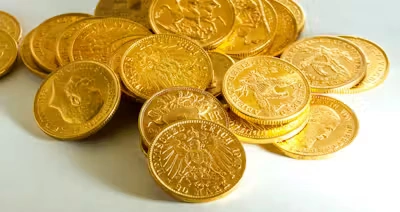
After having experienced a somewhat mixed beginning to the year, with falling prices from January to April, May was a far better period for gold and saw the price recover nicely, although it still remains well below its August 2020 peak. The yellow metal traded up through various psychological resistance levels to end the month at a little above the $1,900 mark, seemingly on its way back to the $2,000 plus heights it accomplished in August last year.
I had been tempted to lower my year-end forecast for the gold price during the yellow metal’s weak period, but the recent recovery may even now suggest that my prediction that gold could reach around $2,225 before the end of the current calendar year (a forecast made just before Christmas 2020 on the sharpspixley.com website) may even be looking on the conservative side
Precious metals opened the new month in Asia and Europe on a positive note, but were beginning to fade a little as the morning progressed. We will need to wait as the day advances and North American markets open, to see if $1,900 gold and $28 silver now becomes a base leading to another leg up for prices. At the moment the portents are positive, although the next leg up towards $1,950 for gold and $29 silver may be a little slower to achieve.
There are various positives for precious metals at play here, but pride of place may well be the growing expectation that the US Federal Reserve (the Fed) will be forced to start tapering its QE program, and perhaps start to raise interest rates. This would be in order to try and combat inflation which some commentators fear may be beginning to get out of hand as new COVID-19 infections continue to fall. The US recorded its lowest levels of new COVID-19 infections and deaths for about a year or more over the long weekend, although statistics recorded over the Memorial Day holiday may understate the true position.
Regarding statistics, though, it should be recognized that the Fed uses an inflation measure for its calculations which comes up with a potentially far lower inflation rate than the Consumer Price Index (CPI) which is the rate which most consumers will recognize as bearing the closest to what they might encounter in their own experience. The CPI is also the rate that tends to be seized on by the media. Latest CPI figures are heading towards an annual inflation rate of perhaps 6% – well in excess of the Fed target rate of around 2%. The Fed, though, uses a measure called the Personal Consumption Expenditures price index (the PCE).
An informative article on the NASDAQ website explains the PCE roughly thus: While the Consumer Price Index (CPI) looks at what people are buying, PCE looks at what businesses are selling. It is claimed that the PCE tends to capture a broader picture of spending and contemplates substitution among goods when something gets more expensive – so, for example, if the price of bananas goes up, it takes into account that some people will start buying apples instead. PCE doesn’t just measure people’s out-of-pocket costs, for example for big expenditures for healthcare, it will also take into account what Medicare is contributing.
As a result of the different way of calculating inflation, the PCE can come in several points lower than the CPI. The Fed considers the PCE a more accurate way of measuring real inflationary trends – hence its view that any upwards blip in inflation is only transient – and the utilization of this measure will thus give it more leeway in sticking to its average inflation target of 2% without seeing the necessity to taper QE, or raise interest rates.
However, a continued high CPI rate will probably have the members of the Fed’s Federal Open Market Committee (FOMC), with its next meeting in just over 2 weeks’ time, at least ‘talking about talking about’ possible interest rate rises in a shorter timescale than it had previously been suggesting.
Given the Fed’s ever-cautious language in its post-FOMC meeting statements, any inference that such discussions may even be taking place would almost certainly be picked up by Fed-followers and affect markets accordingly. Thus any ensuing comments along these lines would probably drive the gold price higher, even if there is, in reality, no actual likelihood of any change in the Fed’s tack in the short to medium term.
The Fed, and its chair, Jay Powell, have been very clear that the central bank’s main priority is to bring US national unemployment down to its pre-pandemic level, and it considers that a continuation of its current low interest rate and significant QE policy is the best way of achieving this. Given that on its PCE inflation level calculations the Fed has been consistently comfortably undershooting its 2% inflation target, a period of accommodating plus 2% inflation to bring the average up to target, may well not be contrary to its near term policy. Ultra low to negative real interest rates are very much gold positive.
Meanwhile, other factors also appear to be moving in gold’s favor. Gold ETF sales have reversed to become deposits and there is at least anecdotal evidence that Central Bank buying may be picking up too. Early figures for Q1 new mined gold production suggest a downwards trend at long last – perhaps peak gold is already with us.
Momentum has seen the gold price rise more than 7% to its current level this month and, as mentioned above it moved up through what had been assumed to be various psychological barriers with apparent ease. There has been a bit of a stutter around the $1,900 level, but that seems now to have been overcome and there seems to be little to stop the price rising to $1,950 or higher, putting $2,000 gold back in sight, although there could be a temporary correction due to profit taking on the way to $1,950.
Indeed if gold manages a similar percentage increase to that achieved in May in June it could even hit $2,030 by the month end. This is perhaps unlikely. But if the yellow metal consolidates above $1,900 prior to moving a notch or two higher, then certainly the low $2,000s could be in the cards by the end of the summer.
by Lawrence Williams
Lawrence (Lawrie) Williams is a highly regarded London-based writer and commentator on financial and political subjects, specializing in precious metals news and commentary. He graduated in mining engineering from The Royal School of Mines, a constituent college of Imperial College, London. He has contributed articles on precious metals to the Financial Times, Sharps Pixley, US Gold Bureau and Seeking Alpha among others.
The opinions expressed in this article are the author’s own, do not necessarily reflect the opinions or views of Rosland Capital LLC or its employees, and do not constitute financial or investment advice or recommendations from the author or Rosland Capital or its employees. The author is compensated by Rosland Capital for his articles.