
Rosland Capital on Gold and Other Precious Metals
January 2025 News Digest
January 20, 2025
- This past Thanksgiving, a coin worth $3,000 was dropped into a Salvation Army donation kettle in Monmouth Oregon.
- A rare coin featuring Brutus, minted just after Caesar’s assassination, is going to auction.
- One of California’s famous “Cowboy” gold coins, an 1850 $10 gold coin, recently sold at auction for a record-breaking $1.26 million.
- Rosland Capital CEO Marin Aleksov recently sat down for an interview at the Better Business Bureau Symposium on Precious Metals.
Rosland donates 1-kilo gold coin to benefit children’s charity
May 24, 2021

The Inflation Effect on Gold and Silver Prices
May 17, 2021
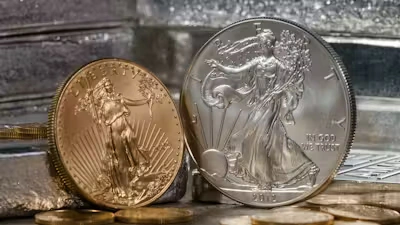
While they are generally seen as something of an inflation hedge, whether justifiably or not, higher interest rates, used to try and control inflationary trends, can also be something of a negative factor for gold in particular. Precious metals are non-interest paying assets, but this means they appear to be strongest when interest rates are effectively negative – i.e. lower than the inflation rate – as they are at present.
However, if the US Federal Reserve does raise interest rates, it would probably only be by a tiny amount so the chances are that they would still effectively remain in negative territory. Higher US interest rates can raise the dollar index, though, which has been trending weaker of late, and a higher dollar tends also to lead to a lower gold price in dollar terms.
The US Fed though has gone on record as emphasizing that a return to pre-pandemic employment levels is its main priority and is thus, for now, holding firm on its low-to-zero-to-n real interest rate policy and continuation of QE at current levels.
It has been undershooting its 2% inflation target for many months, and thus its logic seems to be to allow inflation to rise above this level for a period in order to bring its average rate up to the target level. The big question here, though, is does it possess the tools to keep the possibility of sharply rising inflation under control as the US recovers from the impact of the pandemic and the resultant inflationary build-up?
To an extent, whether the Fed can keep inflation under control may depend on how great the inflationary pressures actually are. Fed chair Jay Powell has gone on record as claiming that any inflation rate rise is likely to be purely transitory, and perhaps in the way the Fed measures inflation that may well be the case. But this tends to be viewing inflation through rose-tinted spectacles and the Fed’s inflation perspective bears little relation to the kinds of inflation levels currently being experienced by the American public which is probably in excess of 4% annually.
Regarding inflation and the Fed’s likely reaction, US Treasury Secretary, Janet Yellen, may have inadvertently let the cat out of the bag. If anyone knows how the Fed works and thinks, it is Yellen, as a former Fed chair. And she is reported as saying “It may be that interest rates will have to rise somewhat to make sure our economy does not overheat, even though the additional spending is relatively small relative to the size of the economy”. The comment caused some confusion in the markets and Yellen was quick to backtrack, stressing that she was not predicting or recommending an imminent increase in interest rates. However, that carried the impression that she was just trying to calm the markets in the way that politicians do in the interests of damage limitation.
With the appointment of Yellen as Treasury Secretary, there is an impression that the Biden Administration is attempting to merge the opinions, if not the actual policies, of the Fed and the Treasury, despite the former’s supposed impartiality. If this is indeed the case, then any statement by Yellen is likely to mirror the Fed’s views closely, but in this case she perhaps misjudged her initial statement in making it more significant in its interpretation than the kind of coded non-committal statements that tend to be the Fed’s post- Federal Open Market Committee (FOMC) meeting statement hallmarks.
We thus suspect that the Fed may well indicate that it might indeed start to raise interest rates, albeit by a very small amount, sooner than it has previously been forecasting. This decision would probably happen in its deliberations at the next FOMC meeting, which takes place in mid-June. If that is the case, it may thus be seen as the Fed recognizing that inflation is rising faster than it would like, although it still would seem to have plenty of leeway given its many months of an undershot inflation target level.
In the past the mere suggestion that the Fed might be about to start raising interest rates would have been taken by the markets, at least initially, as being negative for precious metals and equities prices. This time around though, any such announcement could be taken as indicating that serious inflation worries are in evidence. Nevertheless, the likelihood is that interest rates will still remain effectively negative and, in such a scenario, we suspect that precious metals prices could receive a boost, driving them to the next level – perhaps to $1,900 for gold and $29 for silver. At the same time, though, equities prices and bitcoin might well fall back as the latter already seems to be doing, so be warned.
The Fed’s seeming reluctance to raise rates at all for the time being, probably stems from the possibility that any perceived tightening of its policies could precipitate a severe downturn in equity prices. As long as these seemingly ever-continuing upwards price movements continue, the US Government can keep maintaining that overall its economic policy is working.
However an equities downturn, if prolonged, or steep, could give the opposite impression. Last time the Fed raised rates the equities markets rapidly turned south and the Fed came under extreme pressure from the then-Trump Administration to quickly reverse its decision, which it did. The equity indexes are the most visible signs of economic strength, if not necessarily the most accurate ones.
Many commentators thus feel that the statements following June’s FOMC meeting will give the hint that there may well be a rise in interest rates ahead, albeit a very small one. If that is the case, then there will be the broad conclusion drawn that the Fed is at least a little worried about rising inflation and the markets may well react accordingly.
Gold and silver will likely trade a little higher and equities may come off a little. The pgms as primarily industrial metals may also weaken. But, unless there are signs that the Fed could pursue a continuing series of interest rate advances, such precious metals and equities price movements could be limited and of short duration.
Overall the impact, at least in June, would likely be extremely limited. It is whether the Fed, at subsequent FOMC meetings – or even between such meetings – gives the slightest impression that further interest rate rises lie ahead that the markets could be spooked.
For the time being, the Fed seems confident that it has the tools to keep runaway inflation well under control and any inflation rises are indeed purely ‘transitory’ (the current Fed buzz word).
by Lawrence Williams

Lawrence (Lawrie) Williams is a highly regarded London-based writer and commentator on financial and political subjects, specializing in precious metals news and commentary. He graduated in mining engineering from The Royal School of Mines, a constituent college of Imperial College, London. He has contributed articles on precious metals to the Financial Times, Sharps Pixley, US Gold Bureau and Seeking Alpha among others.
The opinions expressed in this article are the author’s own, do not necessarily reflect the opinions or views of Rosland Capital LLC or its employees, and do not constitute financial or investment advice or recommendations from the author or Rosland Capital or its employees. The author is compensated by Rosland Capital for his articles.
May 2021 News Digest
May 6, 2021
- Exploration in Cairo opened back up and gold excavation in Egyptian tombs will commence!
- A piece of copper struck by the U.S. Mint in Philadelphia in 1794 sold at auction for much more than expected.
- 3,000-year-old Chinese bronze wine vessels from the Shang dynasty sold for a total of $8.6 million at auction.
- David Hendin, of the American Numismatic Society (ANS), answers questions in CoinWeek about coin collecting basics.
- For the first time, Britannia, the female warrior who symbolizes Britain, is depicted as a woman of color on a UK coin.
- For CoinWeek, Tyler Rossi shares the ten coins he would most like to own.
- Increasing interest in vehicles powered by hydrogen fuel cells drives greater interest in platinum group metals.
- Archaeologists have unearthed a rare bronze bull dedicated to Zeus found at the site of the ancient Olympic Games in Greece.
- Numismatist David Hendin shares his insight into the fascinating history of the most famous coins from ancient Rome and Judea that tell the story of clashing cultures and transitions of power.
- See how an auction featuring 701 lots of world and ancient coins reached a sales total of $41,941,592.
- Learn more about how and why algorithms are gold’s major foe.
- What’s the connection between precious metals and sustainable energy? In this blog article, our CEO, Marin Aleksov, explains the role of gold, silver, platinum, and palladium in renewable energy.
- Check out this blog article by Marin Aleksov, CEO of Rosland Capital, who shares five tips for buying gold.
Silver: the “devil’s metal” rides out
May 4, 2021
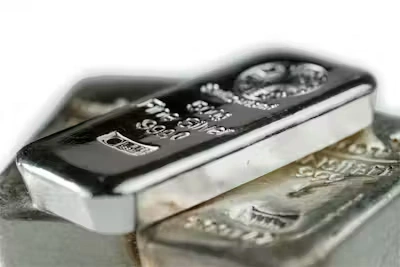
Silver: The ‘devil’s metal’ rides out.
There has been considerable controversy over the likely supply/demand fundamentals and future pricing situation for silver, following on from the attempts a month or so ago to drive up the price with a short squeeze. True the big bullion banks hold massive short positions in silver on the COMEX, but most also carry large physical bullion positions too, which tend to counteract silver’s vulnerability to such moves.
Pierre Lassonde, former CEO of Newmont and co-founder of Franco Nevada, who’s been around a long time, describes the fixation with the silver shorts as ‘loony tuney’. That’s not to say he’s not positive on the silver price, though. He is!
Lassonde feels that the future lies in three metals – copper, gold and silver. On gold he’s looking at perhaps up to 5-8 years to see it really break out and surge in price – and where gold goes, silver tends to follow.
While Lassonde was looking specifically at the purchase of silver during the exceedingly short lived social media-promoted silver squeeze episode, he did express one element of positivity. Those who bought silver purchased a metal which did have inherent value in its own right. So unlike in an equity bubble and subsequent total price collapse, silver still retained some value. In fact, the silver price came back a few percent from its peak, – just worth a few dollars less than they may have paid for it. A salutary lesson perhaps, but probably not a disastrous one in most instances.
Silver is not only contentious because of perceived manipulation by the big banks and governments, which may indeed be happening – all financial markets are probably manipulated to some extent by the big money. However, the silver price prediction dichotomy is also because there are not only hugely supportive silver bulls out there, but there is also a significant element among analysts and commentators who really do see silver as the ‘devil’s metal’ and thus prone to enormous price fluctuations. This is not helped by the sometimes conflicting views on supply and demand fundamentals for the metal. Currently silver seems to be consolidating at, or around, the $26 mark. If gold takes off, silver may too.
On balance supply would seem to be plentiful, but industrial usage continues to grow (silver is very much a ‘green’ element in the fight against climate change) while its anti-bacterial and anti-viral properties mean that demand in the medical sector also continues to be strong. It remains much in demand in the jewelry industry, particularly as the gold price rises, and it is also in demand, of course, as a safe haven asset.
Given that the silver price usually tends to move in lockstep with the gold price, but often at an enhanced rate in a rising market, some analysts remain positive on silver for the remainder of the current year at least. Indeed silver prices may stay elevated for as long as the Fed keeps interest rates at the current ultra-low levels.
Even if the Fed bows to inflationary pressures and is forced into raising rates, this is still unlikely to bring them out of their current real negative pattern. Thus they would likely remain positive in effect for gold, and thereby silver too, once detailed analysis of any such move kicks in.
So all in all, I come down on the side of the silver bulls. If gold continues to advance, then silver may too – but then with its ‘devil’s metal’ attribute nothing can ever be certain with silver!
by Lawrence Williams
Lawrence (Lawrie) Williams is a highly regarded London-based writer and commentator on financial and political subjects, specializing in precious metals news and commentary. He graduated in mining engineering from The Royal School of Mines, a constituent college of Imperial College, London. He has contributed articles on precious metals to the Financial Times, Sharps Pixley, US Gold Bureau and Seeking Alpha among others.
The opinions expressed in this article are the author’s own, do not necessarily reflect the opinions or views of Rosland Capital LLC or its employees, and do not constitute financial or investment advice or recommendations from the author or Rosland Capital or its employees. The author is compensated by Rosland Capital for his articles.
April 2021 News Digest
April 23, 2021
- Starting in 2022, the Circulating Collectible Coin Redesign Act will commemorate American women who have shaped history on up to five quarters per year.
- Check out the 50 most valuable and rare coins from the UK.
- The 1933 double eagle $20 gold coin is one of the most famous coins among American coin collectors.
- Originally worth about 12 1/2 cents, a starfish token may now be worth around $2,000 at auction.
- The 1804 silver dollar called the Stickney-Eliasberg-Miller, which is one of the most famous American coins, was sold at auction.
- The WPIC reports that there is a strong industrial demand for platinum, which is outstripping the supply.
- Author Steve Benner shares the 10 ancient coins he would love to own.
- Rare coin auction house Stack’s Bowers & Ponterio will offer up the most expensive non-US coin in the world.
- Congressman Alex Mooney acknowledges the importance of gold and silver and introduced a bill to end federal taxes on gold and silver.
- Learn why the demand for raw commodities is so important in China and find out which metals are part of the top commodities of 2021.
- Will the Covid-19 pandemic support package have an impact on the market of precious metals?
- According to China’s Shanghai Gold Exchange (SGE), the nation’s gold demand has been rising since the decline caused by COVID-19.
- Gary Wagner, editor of TheGoldForecast.com, gives a breakdown of the gold and silver price rebound.
- Rosland Capital CEO, Marin Aleksov, gives an in-depth explanation on the 3 ways to find gold.
Gold, Algorithms, and Twitter
April 21, 2021
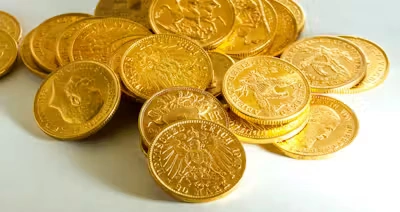
Gold and the algorithms – not necessarily good friends.
Buying gold has a certain degree of historical support in its favor. But we live in a new computer age where many purchasing decisions are made by computer algorithms that seldom have gold’s kind of historical perspective built in. Purchasing decisions using computer algorithms are thus prone to the kind of supposedly rational choices programmed into them by their developers, which tend to focus on less esoteric calculations than those that might influence the individual’s thought patterns.
Gold and silver do not really tick the boxes. Platinum and palladium may be seen as perhaps more relevant given they are subject to an almost fully industrial supply/demand pattern not requiring faith in past performance to make computerized purchase decisions relating to the metals.
This means that perhaps gold, and maybe silver too, is not necessarily driven by the same forces which seem to be pushing paper-based assets ever higher. In part this has been exacerbated by the sea change in market access. Here a massive number of individual new players have entered the market – but their choices are often being driven by social media, and their belief in the almost messianic statements being offered up by some charismatic individuals who are adept at playing the markets.
Nowadays something as banal as perhaps a somewhat incomprehensible single word announcement on a platform like Twitter can drive a commodity, company or even a whole sector to a new height.
For the moment, gold and silver in particular don’t fit in with the algo-driven world, nor do they have the backing of a suitably charismatic promoter. The fact that they have done as well as they have, albeit in terms of underperformance in the eyes of their followers, should probably be seen as a positive. However it doesn’t protect them for the moment from the current vagaries of the modern world.
My colleague, Ross Norman, has written an excellent article on gold in the algo-driven world in which he likens gold’s situation with the computer algos to the astronauts’ mostly doomed relationships with HAL, the computer in Arthur C. Clarke’s 2001- A Space Odyssey, and subsequent novels. Ross notes:
“The rationale for the recent selling in gold has been clear … if it can be demonstrated that gold has a high inverse correlation co-efficiency with certain other assets – and there is clear logic underlying the claim – then the bright sparks that operate algos put in place a trading strategy that exploits that ‘knowledge’. It worked in gold’s favor for a couple of years and now it’s working against us. No matter that the story has changed and the relationship should be ended. The key thing is the self-reinforcing element as successful trades breed successful trades, amplifying the problem.
Perhaps the problem here is that buying gold and silver is not entirely ‘logical’ in a computer’s internal processing environment. Computers take what might to a machine seem illogical out of the equation. Hunches and emotional attachments relative to a stock, or in this instance a precious metal, are thus seen as irrelevant. True the huge volume of new-age market players following the social media-inspired dream meme can rock the boat as we have seen of late. But, unless this becomes focused on precious metals it will have little effect. Precious metals are not really on the map for these types of buyers – except perhaps in the case of media-generated technical attacks, as we saw with silver around a month ago.
So what will happen with precious metals under these circumstances? Not much for the time being seems to be the answer, with gold probably remaining range bound between $1,680 and $1,750 unless some unforeseen event comes through to upset that particular apple cart. Precious metals may perhaps protect against a collapse in the prices of the currently most high-flying paper-based assets. These are never going to meet their over-hyped earnings potential whatever the outcome of the putative economic revival, though. Also bitcoin, which appears to this observer to be in a severe bubble given it has little or no real substance behind it, may be vulnerable to a correction.
Gold and silver will likely continue to offer some protection against the vagaries of the markets, regardless of algo-driven buying patterns. In my view, there is an inbuilt psyche within the still significantly large precious metals community that may prevent any significant price downturn from happening. At the same time, the massive price rise forecasts beloved by some commentators seem highly unlikely to happen, unless there is some massive global financial reset involving gold, which itself seems unlikely in the foreseeable future.
by Lawrence Williams
Lawrence (Lawrie) Williams is a highly regarded London-based writer and commentator on financial and political subjects, specializing in precious metals news and commentary. He graduated in mining engineering from The Royal School of Mines, a constituent college of Imperial College, London. He has contributed articles on precious metals to the Financial Times, Sharps Pixley, US Gold Bureau and Seeking Alpha among others.
The opinions expressed in this article are the author’s own, do not necessarily reflect the opinions or views of Rosland Capital LLC or its employees, and do not constitute financial or investment advice or recommendations from the author or Rosland Capital or its employees. The author is compensated by Rosland Capital for his articles.
The Biden Stimulus and the Fed
March 25, 2021

A couple of weeks ago, President Biden signed off on his administration’s Covid-19 pandemic support package, estimated to cost the U.S. Treasury around $1.9 TRILLION! In this day and age billions of dollars are seen as small change and trillions as the norm when it comes to the volumes of money being thrown at what might be considered otherwise insurmountable problems. But what is the likely impact?
Firstly let us consider what is included in the support package, which has only been marginally watered down from the original Democratic Party proposals – opposed almost en masse by Republican legislators who considered it far too costly to the US economy going forward. The stimulus plan does seem to have been welcomed though by the bulk of the US population.
Wikipedia sums up the key elements of what the plan, also described as the American Rescue Plan, comprises thus – see: American Rescue Plan Act of 2021:
-
$1,400 direct payments to individuals earning up to $75,000 a year;
-
Extending expanded unemployment benefits through the end of September;
-
Increases the value of the child tax credit;
-
$130 billion to primary and secondary schools;
-
$45 billion in rental, mortgage, and utility assistance;
-
Billions for small businesses;
-
$14 billion for a national vaccine program, including preparation of community vaccination centers;
-
$350 billion to help state, local, and tribal governments bridge budget shortfalls
In theory at least, the infusion of such a large amount of money into the economy should also benefit the equities and precious metals markets alike as some of it is bound to find its way into them. A recent study published on the ZeroHedge website suggested that online brokerage account users would invest around 37% of future stimulus checks in the stock market. This was reckoned to be a material force because the recent surge in retail investing has been by a younger, often new-to-investing and aggressive cohort not afraid to employ leverage and which tends to invest online. This injection of capital into the equities market could be worth upwards of $30 billion. As it turns out, markets following the announcement of the rescue plan’s signing have been fairly subdued suggesting that much of the plan’s positives for the economy had been heavily publicized in advance, and thereby already discounted, although the wait for delivery of the actual stimulus checks could also be a contributing factor.
One needs to take into account that the equities market in particular seems to be going from strength to strength on the back of this new breed of investor dabbling in the markets via no-commission online brokerages like Robinhood.com. Precious metals are perhaps lagging as an investment choice for this particular market segment – albeit an increasingly active one. Precious metals are, after all, asset options which do not necessarily appear on the average investor’s radar.
The other key influence on the equities and precious metals markets was the meeting of the Federal Reserve’s Open Market Committee (FOMC) on Tuesday and Wednesday last week. Effectively the Fed has to work with the Treasury to set the scene for the implementation of the Biden stimulus plan. In its deliberations the FOMC has to manage the economic environment in which government policy operates. In particular the Fed effectively sets America’s basic interest rate policy and has the brief of bringing unemployment down to the level the government feels is ideal for its economic growth intent – currently targeted at around the 3.5% level which seems to be viewed as the desired unemployment maximum. Indirectly the Fed’s policy will also impact the national inflation rate, the control of which, for the moment at least, takes second place to the achievement of the national unemployment target.
To undertake its policy decisions, the Fed needs to take a calculated view on likely economic growth – something that is hugely complicated by the impact of the Covid-19 pandemic and its likely progression even as the country’s aggressive and impressive vaccine rollout is under way. New infections have dropped sharply, but may be edging their way up again as some, mostly Republican, states seem to be relaxing virus controls in moves to try and regenerate their economies. What this means in effect is that minutes of the FOMC meeting, and subsequent statements by Fed chair Jerome Powell, are pored over by media and analysts to try and glean the slightest hint on the Fed’s assessment of the US economy and its likely future path.
Powell’s statements tend to be exceedingly cautious in their content and give little away, but the gist on this was that there was unlikely to be any major change in overall policy and that the US economy was improving, and, if anything, current low (and effectively negative) interest rates would remain in place until at least 2023. The Federal Funds rate (the interest rate at which banks and other depository institutions lend money to each other, usually on an overnight basis.) thus remains at between zero and 0.25%.
Powell also indicated at a post-FOMC press conference that the Fed will continue with its current patient approach and any possible tapering is unlikely for the foreseeable future. The reduction of the unemployment level to that considered as the maximum (around 3.5%) is the key aim, and the Fed is effectively unworried about the potential for rising inflation as a small increase is probably desirable, but if it seems to be getting out of control it reckons it has the tools in its armory to effectively suppress it.
As far as gold was concerned, the FOMC’s conclusions were seen as largely positive and the price moved up, although not hugely significantly, in the meeting’s aftermath. In combination, the Biden stimulus and the Fed’s agenda moving forward, should be positive for gold. Silver, despite its primary markets now being industrial, is likely to follow suit. There is perhaps less certainty about the future price path for platinum and palladium, which as truly industrial metals nowadays are much more dependent on the progress of the economy and consumer spending and should perhaps be assessed similarly to other metal commodities, but with small and potentially more volatile markets.
The Fed has likely learned from previous interest rate hikes, and their rapid adverse effects on the highly visible equities markets, to continue its much more cautious approach and the likely resultant delay on any moves to raise interest rates is definitely positive for gold. The fact that gold does not generate interest has always been one of the arguments against it. But conversely if general interest rates are effectively negative with rates falling below inflation levels, as they have done in recent times, then gold, with its reputation as a wealth protector, becomes a more positive asset.
by Lawrence Williams
Lawrence (Lawrie) Williams is a highly regarded London-based writer and commentator on financial and political subjects, specializing in precious metals news and commentary. He graduated in mining engineering from The Royal School of Mines, a constituent college of Imperial College, London. He has contributed articles on precious metals to the Financial Times, Sharps Pixley, US Gold Bureau and Seeking Alpha among others.
The opinions expressed in this article are the author’s own, do not necessarily reflect the opinions or views of Rosland Capital LLC or its employees, and do not constitute financial or investment advice or recommendations from the author or Rosland Capital or its employees. The author is compensated by Rosland Capital for his articles.
Gold Demand in Key Chinese and Indian Markets
March 24, 2021
China gold demand on the rise again but is that even helpful?
Over the past couple of decades, India, and then China, have been by far the world’s two largest gold consuming nations and their combined consumption has been key to the levels achieved by the US dollar gold price. Between them these two nations have probably accounted for a gold intake volume at least as great as the global total of new mined gold in some years. Indeed in the record 2015 year for Chinese gold consumption, that nation, on its own, recorded internal gold flows equivalent to over 70% of global new mined gold production.
However, last year, when the Chinese economy was drastically affected by the Covid-19 coronavirus pandemic, Chinese consumption slipped to around 35% of global new mined gold output. With Indian demand also weak, annual global gold consumption was largely supported by central bank buying and a massive intake of bullion into global gold-backed ETFs – or so it seemed. There is a theory, though, that the latter has just been primarily account adjustments by the big bullion banks in effectively transferring a significant proportion of their large gold holdings from a commodity account to an investment one due to internal policy changes. But even if this was the case, the highly visible ETF gold inflows would have had a positive effect on pricing sentiment.
The tail end of 2020, though, saw ETF inflows turn to outflows and much central bank buying activity disappear altogether. Thus the 2021 levels of Chinese and Indian gold consumption become of ever-increasing importance and interest. And it appears that both may be picking up nicely, but is this too little too late?
For example, the latest February 2021 gold withdrawal figures from China’s Shanghai Gold Exchange (SGE) suggest that the nation’s gold demand/consumption has been rising, possibly substantially, from that of the Covid-19 hit of a year earlier and is getting back towards the levels of 2019 – although still far short of the figures for the record 2015 year and even for 2016 to 2018. Given that February this year will have seen the SGE inactive for a full week for the Chinese New Year, which fell on February 12th, and the immediately following Golden Week holiday, the rise over the 2020 year, when the Chinese New Year fell in late January (25th), is substantial indeed with the SGE then closed for only a couple of February days that year.
The writer equates the level of SGE gold withdrawals as being indicative of China’s total gold demand, even though this is frequently disputed by some other Chinese gold analysts. However we would point out, in support of our premise, that the SGE annual withdrawal total comes out as being close to the sum of China’s own gold output (around 380 metric tons), plus known gold imports from countries which publish these figures in their export statistics, plus a relatively small allowance for gold scrap conversion and imports from unknown sources – in other words the total gold flow into China. As the country does not export gold, this has to approximate to Chinese annual gold consumption. Most other estimates fall well below these known cumulative figures suggesting that they leave out a significant part of Chinese gold consumption – still comfortably the world’s largest.
Table: SGE Monthly Gold Withdrawals 2017-2021 (Tonnes)
|
Month |
2021 |
2020 |
2019 |
2018 |
2017 |
|
January |
159.49 |
110.87 |
218.54 |
223.58 |
184.41 |
|
February* |
92.39 |
28.99 |
99.77 |
118.42 |
148.24 |
|
March |
|
82.27 |
218.03 |
192.61 |
192.25 |
|
April |
|
95.80 |
151.89 |
212.64 |
165.78 |
|
May |
|
69.18 |
123.11 |
150.58 |
138.08 |
|
June |
|
85.71 |
107.45 |
140.59 |
155.51 |
|
July |
|
82.94 |
129.33 |
137.41 |
144.71 |
|
August |
|
111.37 |
107.73 |
190.59 |
161.41 |
|
September |
|
153.98 |
117.08 |
188.12 |
214.24 |
|
October* |
|
94.28 |
91.15 |
142.94 |
151.54 |
|
November |
|
127.65 |
119.43 |
179.08 |
189.10 |
|
December |
|
162.30 |
158.50 |
178.04 |
185.21 |
|
Cumulative** |
251.88 |
139.86 |
318.31 |
342.00 |
332.65 |
|
Full year (SGE) |
|
1,205.3 |
1,642.0 |
2,054.5 |
2, 030.5 |
Source: Shanghai Gold Exchange, Sharps Pixley.
*Months incorporating Golden Week holidays when SGE closed for a full week
** Cumulative totals for first two months as reported by SGE
Regarding this year’s SGE gold withdrawals to date and their big increase over 2020 figures (80% up so far this year), it should be recalled that in the first half of 2020 China was in the throes of attempted control of, and initial recovery from, the Covid-19 virus pandemic, so figures back then are likely to be anomalously low. They did start to recover a little in the second half of the year, and from August onwards began to show increases on the rather weak preceding year’s figures. As the current year continues, with Chinese businesses and manufacturing pretty much back to normal, with any virus flare-ups being rapidly responded to, we would anticipate gold demand also coming back to near normality – not to the record levels of 2015, but definitely to a higher level than in 2020 and quite possibly higher than the already-falling 2019 monthly totals.
That other key gold consuming nation, India, also seems to have seen gold demand pick up in recent months and this will have been enhanced by some positive tax changes on gold imports. These may not change actual gold flows into India that much, but may enhance the official gold import figures at the expense of the high level of smuggled gold, which will have been largely uncounted by official statistics and thus effectively invisible to those compiling global gold supply/demand analyses. Switzerland, which has a history of refining and exporting a substantial amount of the world’s gold, for example, has recorded India as comfortably the biggest recipient of its gold exports for the past few months which serves to confirm the pick-up in demand there.
The perceived recovery in Chinese and Indian demand could not have happened too soon as far as the gold market is concerned.
Other gold demand sectors like gold ETF purchases and central bank accumulations have been turning down. Investor sentiment looks to have been in favor of seemingly ever-rising equities and bitcoin making them probably viewed as less risky places to deposit money and thus diverting investment capital away from traditional safe haven assets like gold.
There does perhaps look to have been a more nervous tone developing in equities over the past couple of weeks. The writer has continually warned against the likelihood of a day of reckoning ahead for equity markets once the realization dawns on the investment sector of the true impact on the economy of the virus pandemic. Even so the resultant downturn may not be as severe as initially predicted given that the economy has probably been rather more resilient than forecast but it could lead to more interest returning to gold investment – particularly if real interest rates remain very low to negative as they are at the moment.
The US Fed is, however, seeing the economy as remaining weak for now and is not planning any changes to its current accommodative policies. The dollar looks weak and could be trending lower. These developments should favor gold yet it is still drifting downwards. A massive turnaround could be due, but the force no longer seems to be with the yellow metal so don’t hold your breath. Markets tend to be about sentiment and that doesn’t seem to be in gold’s favor. The current gold price hiatus could thus be with us yet for some time to come given favorable economic elements no longer seem to have any positive effect. Longer term gold continues to look positive, but it may well mark time, or even drift some more, in the weeks and months ahead.
by Lawrence Williams
Lawrence (Lawrie) Williams is a highly regarded London-based writer and commentator on financial and political subjects, specializing in precious metals news and commentary. He graduated in mining engineering from The Royal School of Mines, a constituent college of Imperial College, London. He has contributed articles on precious metals to the Financial Times, Sharps Pixley, US Gold Bureau and Seeking Alpha among others.
The opinions expressed in this article are the author’s own, do not necessarily reflect the opinions or views of Rosland Capital LLC or its employees, and do not constitute financial or investment advice or recommendations from the author or Rosland Capital or its employees. The author is compensated by Rosland Capital for his articles.
February 2021 News Digest
March 5, 2021
- In addition to being used to exchange goods, coins of the ancient and medieval worlds were struck with the image of the ruler so that subjects would know what he looked like. This extremely rare 13th century gold coin is considered the first “true” portrait of an English king – and is expected to sell for more than £700,000.
- Polish Archeologists have uncovered a Roman-era hoard of coins weighing more than 12 pounds! Archeologists believe the coins were dropped by fleeing Vandals. It’s expected to be one of the country’s largest discoveries of its kind.
- Rosland Capital has recently released its exclusive Arnold Palmer coin. Do you know the story behind his iconic umbrella?
- A rare New York-style Brasher Doubloon recently sold at auction for $9.36 million! Made in New York in 1787, the auction price tag is the most ever paid for a gold coin at auction.
- Did the FBI find $400 million worth of Civil War gold from a remote Pennsylvania forest? A Harrisburg lawyer thinks he has a new clue about this mystery that started nearly three years ago?
- Britain is in the process of revising their Antiquities Law in order to expand definitions and protect more finds of gold and silver. This change comes after a banner year for amateur treasure discoveries — more than 47,000 objects were discovered in 2020.
- An extremely rare English gold coin fetched and impressive $720,000 at auction. The coin features the likeness of King Henry III and was struck more than 750 years ago
- Archaeologists in Egypt unearthed a macabre cache of golden-tongued mummies, buried in the Greek and Roman eras. Researchers have confirmed the presence of coins bearing the name and image of Cleopatra VII at the site.
- Did you know that the UK counts more than 20,000 metal detectorists? These adventurers were responsible for uncovering 96% of the record-breaking 1,300 pieces of treasure found in the UK during 2019!
- The legendary coins of Italy tell the story of its birth and its history through social turmoil, cultures in conflict, and the emergence of a people.
- Rosland Capital CEO Marin Aleksov takes a deep dive into the many uses of platinum that account for its continued value as a precious metal.